
As parents, we often hear children ask questions like, “Why is the sky blue?”, “How do flowers grow?”, or “Where do butterflies come from?” Young children are naturally curious about the world around them. They learn by observing, asking questions, exploring ideas, and making connections. At Beyondia International School Kashiwanoha, we believe that this natural curiosity is one of the greatest foundations for learning.
As an IB Primary Years Programme (PYP) Candidate School, inquiry-based learning is at the heart of our approach. But what exactly does inquiry-based learning mean, and why is it so important for young children?
「どうして空は青いの?」「お花はどうやって育つの?」「ちょうちょはどこから来るの?」
お子さまがいるご家庭では、このような質問を毎日のように耳にするのではないでしょうか。子どもたちは生まれながらにして好奇心旺盛です。周りの世界を観察し、質問し、試し、発見しながら学んでいきます。Beyondia International School Kashiwanohaでは、この子どもたちの自然な好奇心こそが学びの原点だと考えています。
私たちはIB(国際バカロレア)PYP(Primary Years Programme)候補校として、探究型学習(Inquiry-Based Learning)を大切にしています。しかし、「探究型学習」と聞いても、どのような学びなのかイメージしにくい方もいらっしゃるかもしれません。
What Is Inquiry-Based Learning?/ 探究型学習とは?
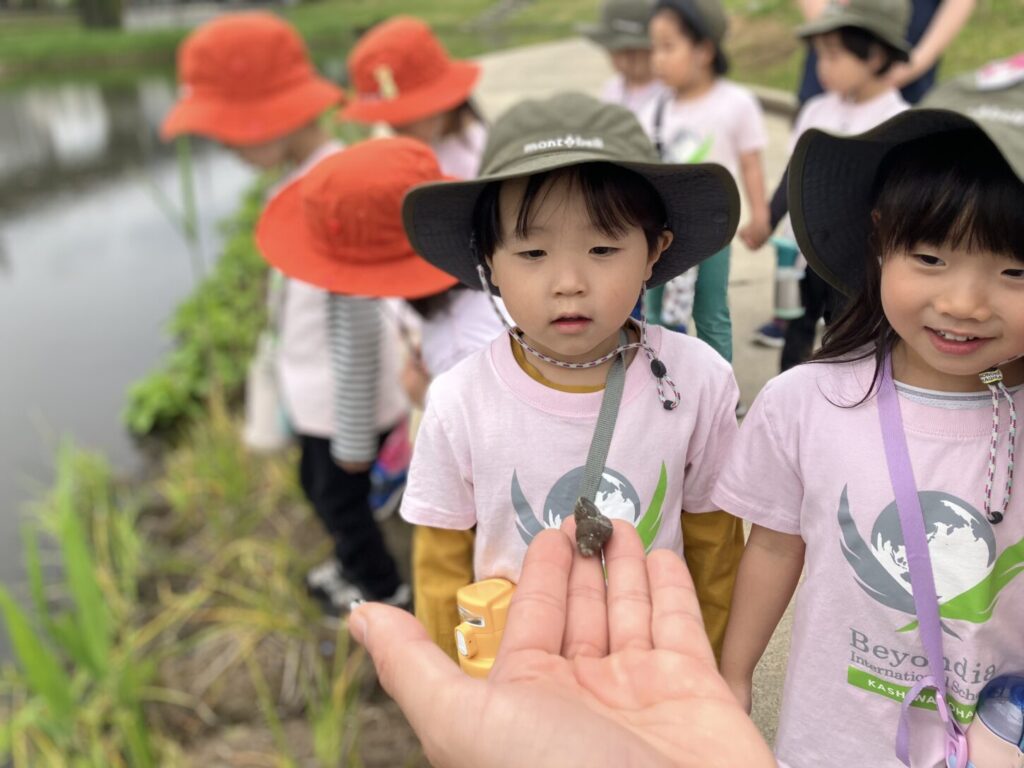
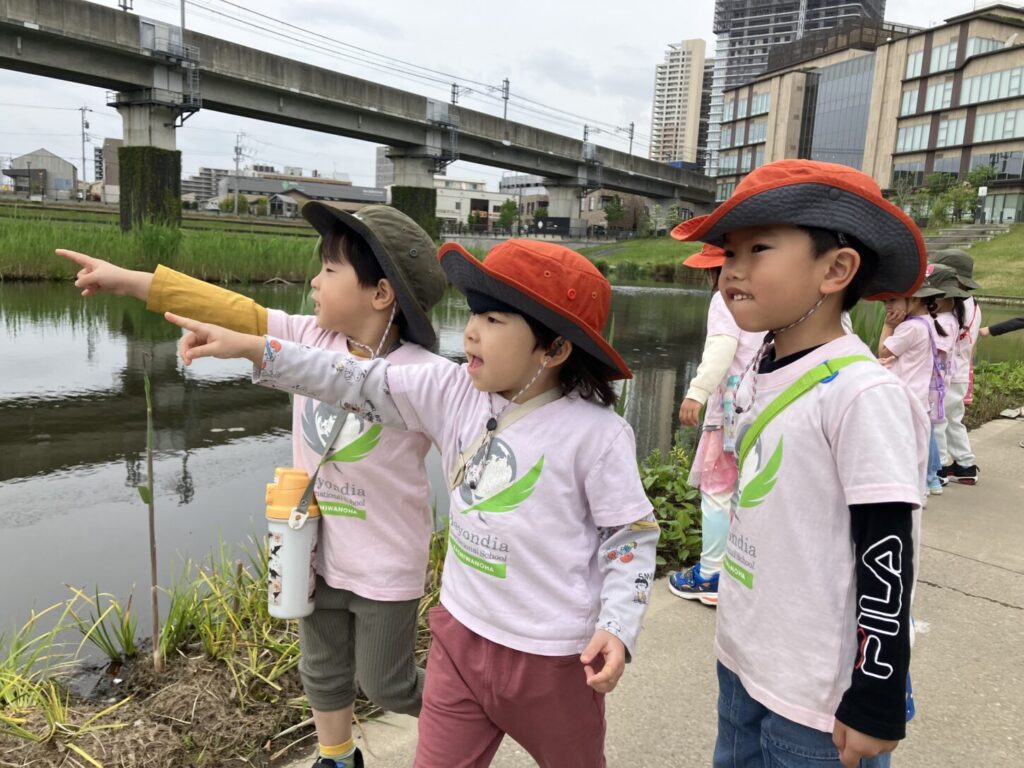
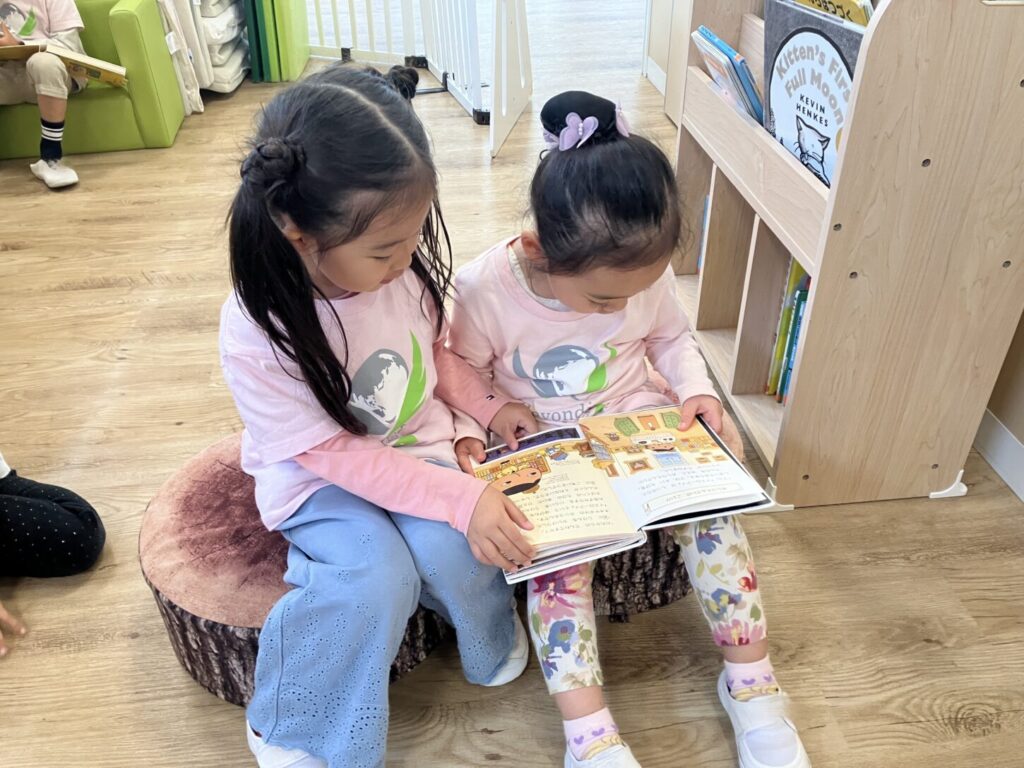
Inquiry-based learning is an approach where children learn through exploration, discovery, and meaningful experiences. Rather than simply being given answers, children are encouraged to ask questions, investigate their ideas, and actively participate in the learning process. When learning begins with a child’s natural curiosity, it becomes more engaging, meaningful, and memorable.
探究型学習とは、子どもたちが自ら考え、問いを持ち、実際に体験しながら学んでいく学習方法です。先生から答えを教わるだけではなく、「なぜだろう?」「どうなるのかな?」という子どもたちの疑問や興味を出発点にして学びを深めていきます。自分で発見したことや体験したことは、より心に残り、子どもたちの学びへの意欲にもつながります。
Is Inquiry-Based Learning the Same as Play?/ 探究型学習と遊びは同じ?
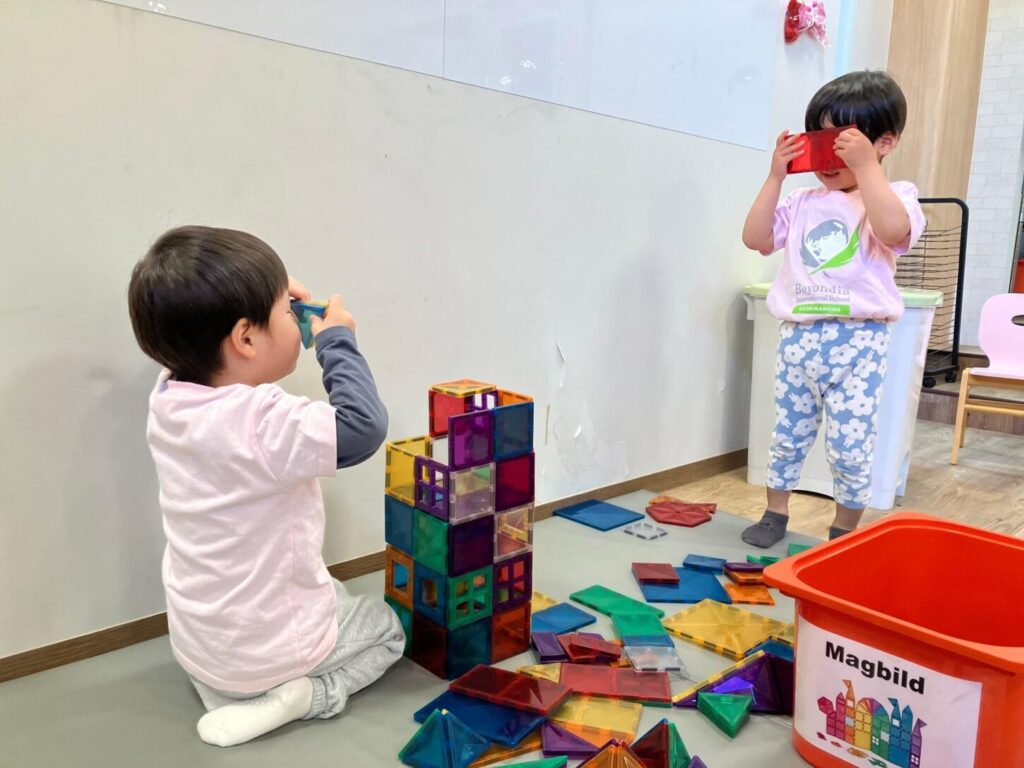
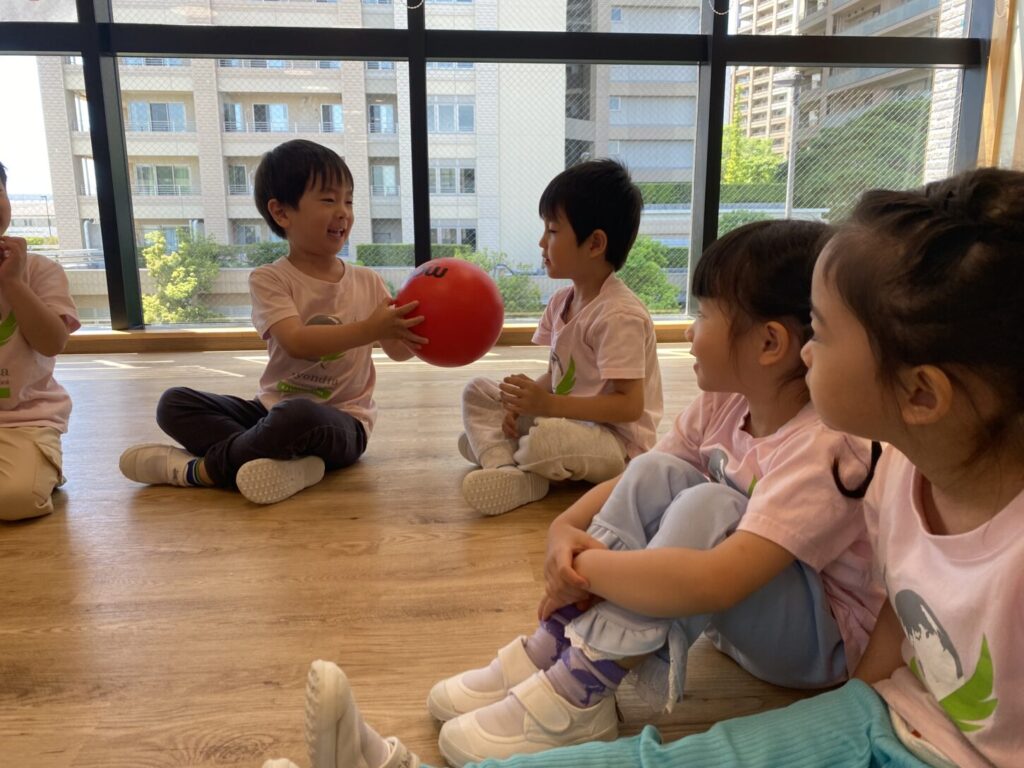
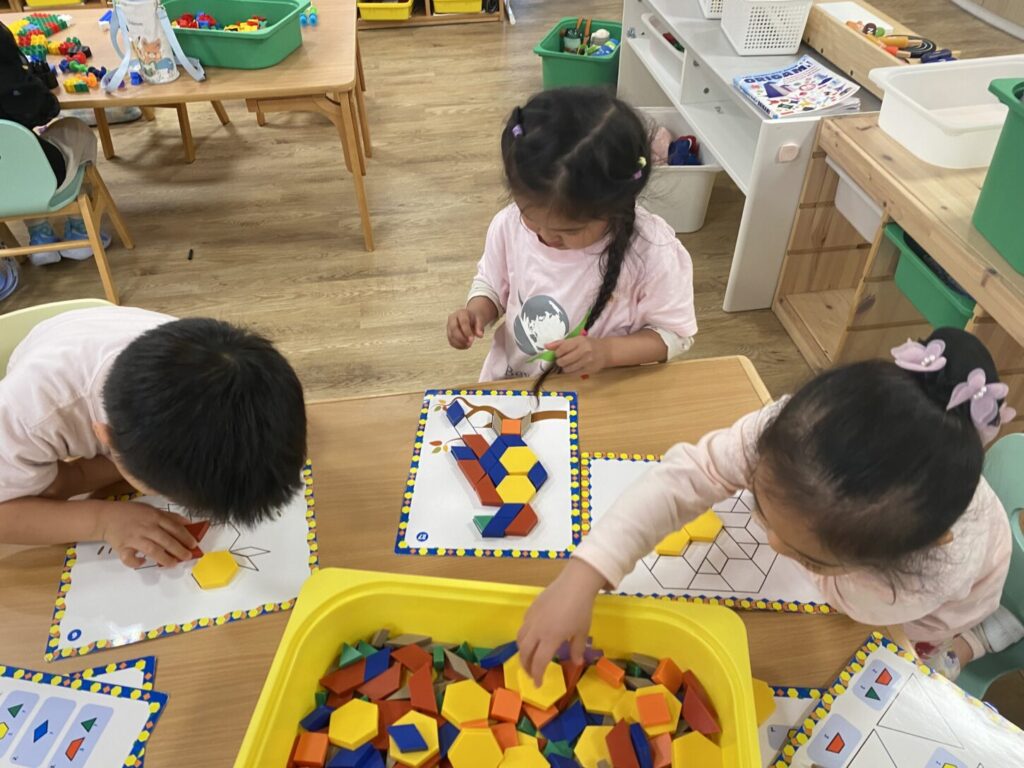
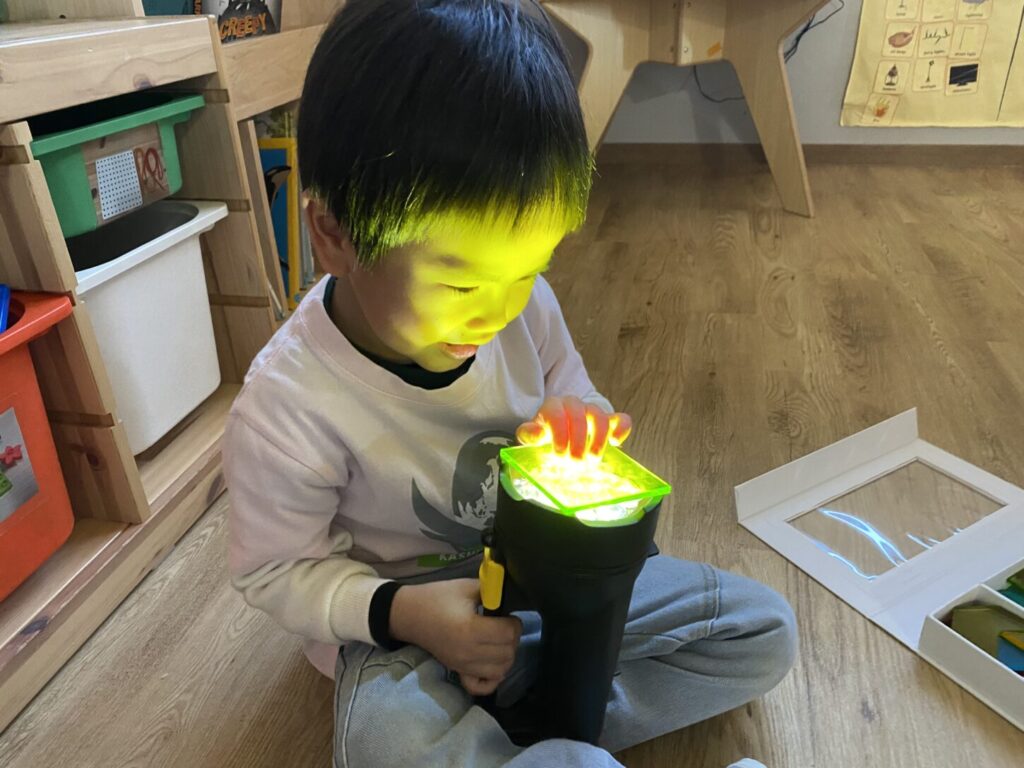
One of the most common questions parents ask is whether children are really learning when they are playing. The answer is yes. For young children, play is one of the most powerful ways to learn. When a child builds a tower with blocks, they are experimenting, problem-solving, and learning from trial and error. When children engage in pretend play, they are developing communication skills, creativity, and social understanding. What may look like simple play often involves deep thinking and meaningful learning.
This is why we often say:
Play = Inquiry
Inquiry = Learning
For young children, play is not separate from learning—it is learning.
保護者の方からよくいただく質問のひとつが、「遊んでいるように見えるけれど、本当に学んでいるのですか?」というものです。答えはもちろん「はい」です。幼児期において、遊びは最も大切な学びの方法のひとつです。例えば、子どもが積み木で高いタワーを作っているとき、ただ遊んでいるだけではありません。どうすれば倒れないかを考えたり、何度も試したり、失敗から学んだりしています。
また、ごっこ遊びでは、お友だちと会話をしたり、自分の考えを伝えたり、相手の気持ちを考えたりしながら、社会性やコミュニケーション能力を育んでいます。
だからこそ私たちは、
遊び = 探究
探究 = 学び
と考えています。
子どもたちにとって、遊びと学びは別々のものではなく、深くつながっているのです。
The Role of the Teacher in Inquiry-Based Learning/ 探究型学習における先生の役割
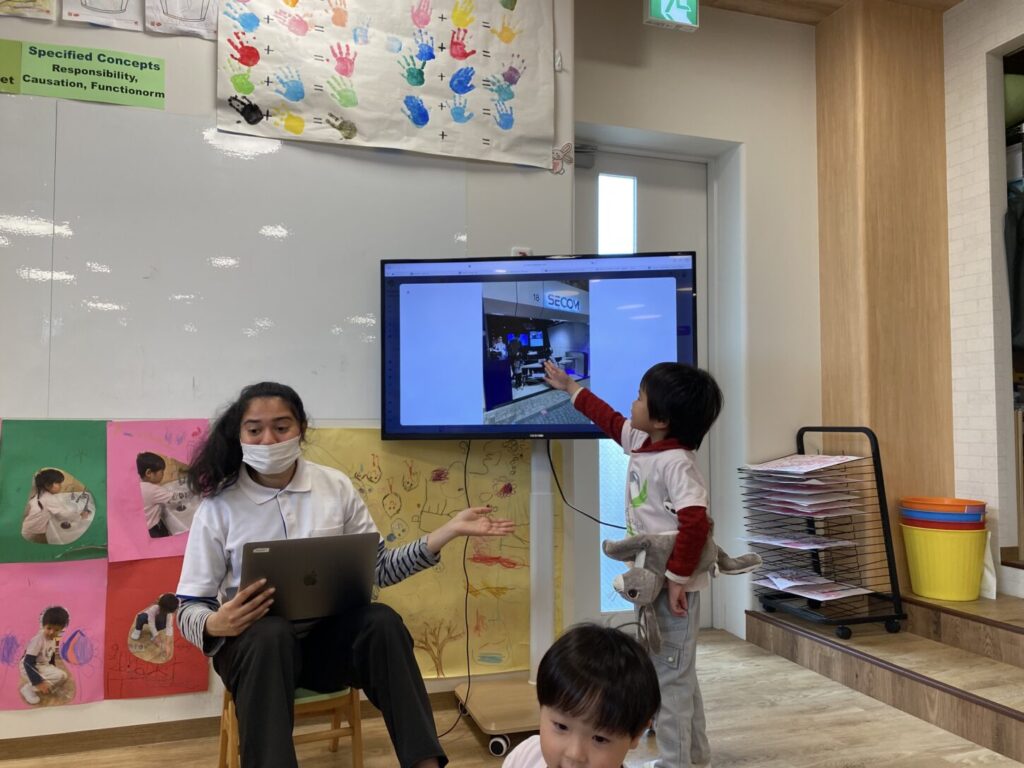
Inquiry-based learning does not mean children are left to learn entirely on their own. Teachers play an important role in guiding and extending children’s thinking. Through careful observation, meaningful conversations, and thoughtfully prepared learning experiences, teachers help children explore their ideas more deeply. Sometimes this means asking a question, providing new materials, or encouraging children to look at a problem from a different perspective.
探究型学習というと、「子どもたちが自由に遊ぶだけ」と思われることもありますが、そうではありません。先生たちは子どもたちの学びを支える大切な役割を担っています。子どもたちの興味や関心を丁寧に観察しながら、考えを広げる質問をしたり、新しい材料や体験を用意したりして、より深い学びへとつなげていきます。子どもたちが自分で発見する喜びを感じられるようにサポートすることが、先生たちの大切な役目です。
What Does Inquiry Look Like in Early Childhood Education?/ 幼児教育における探究型学習の姿
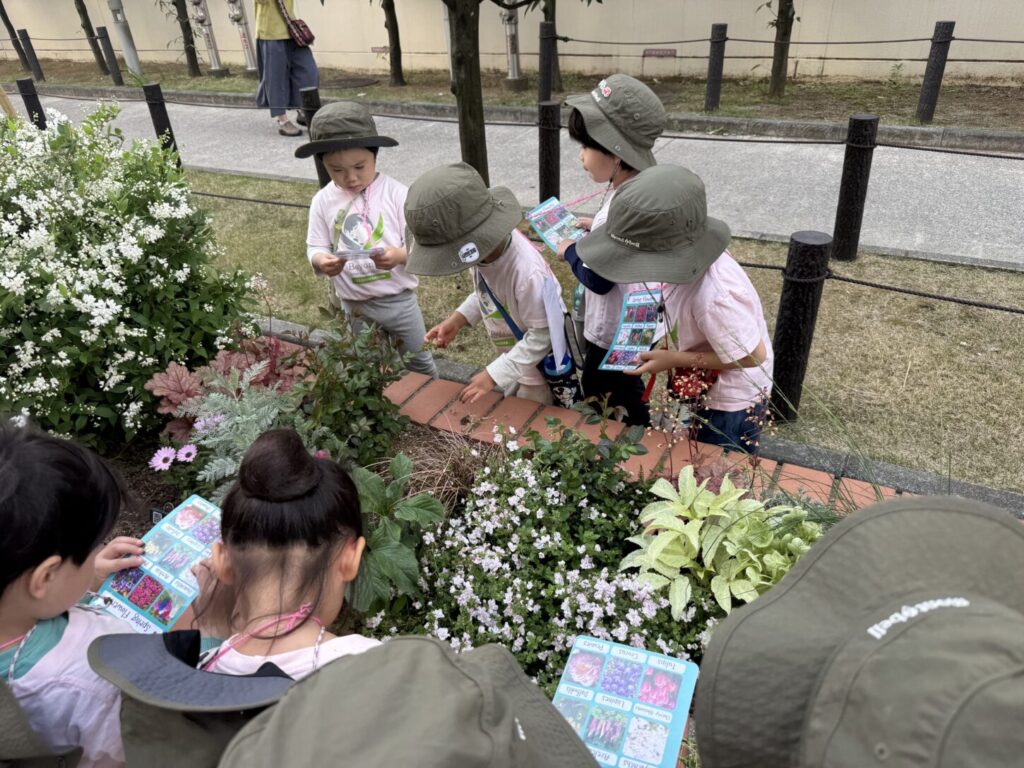
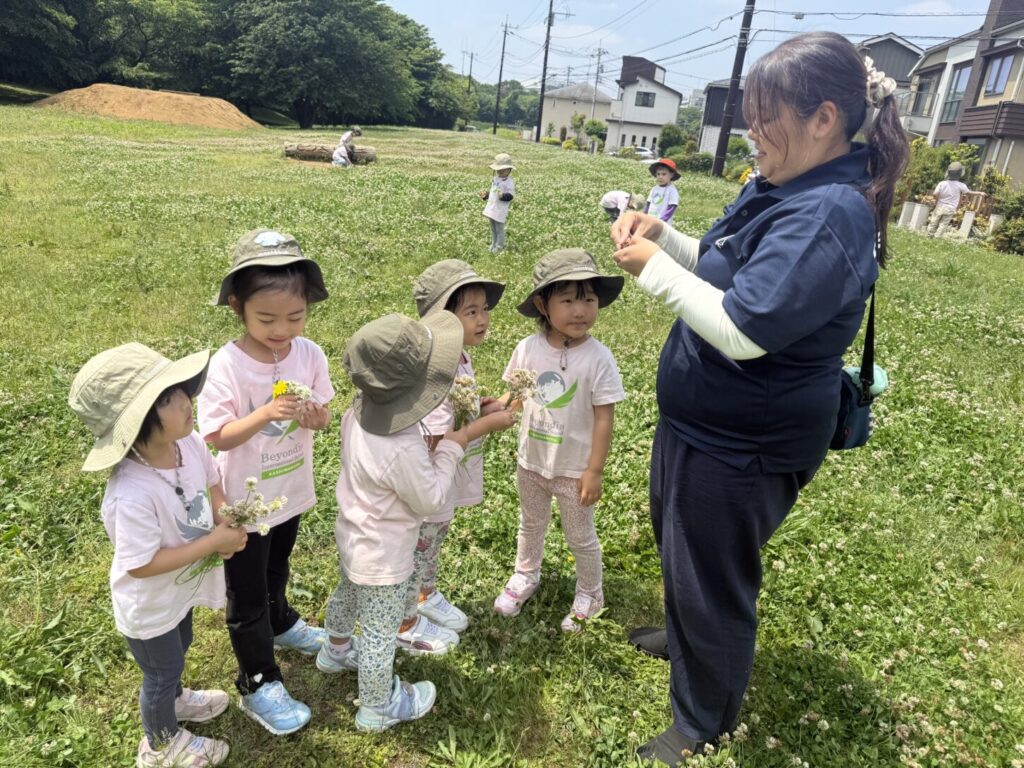
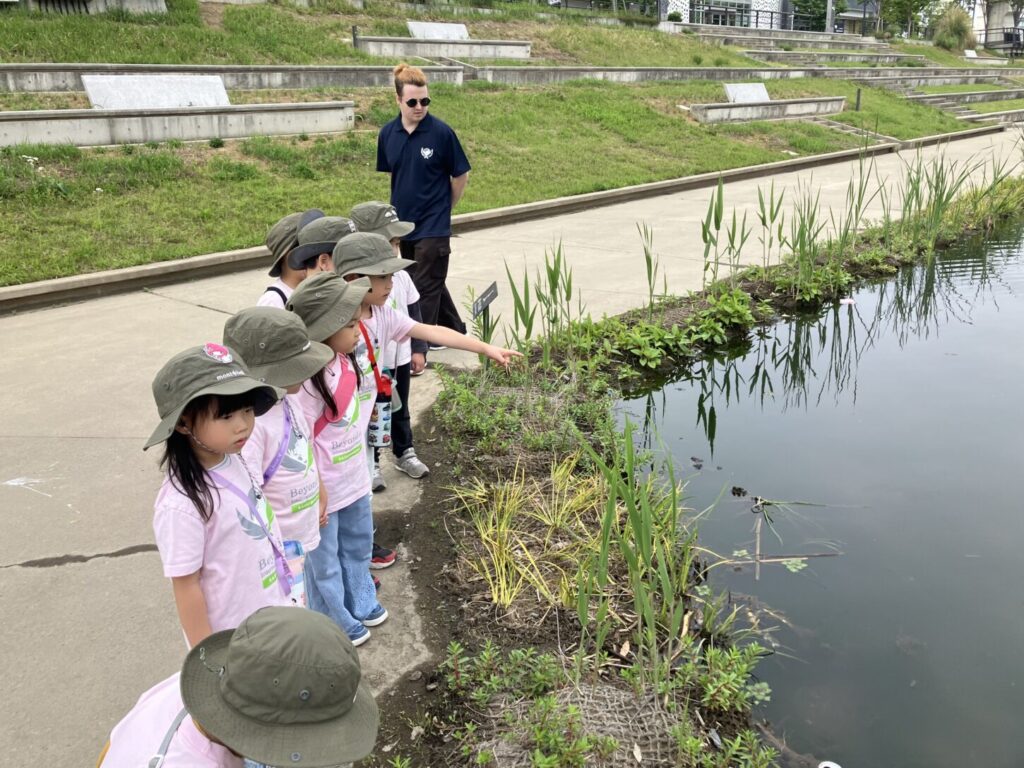
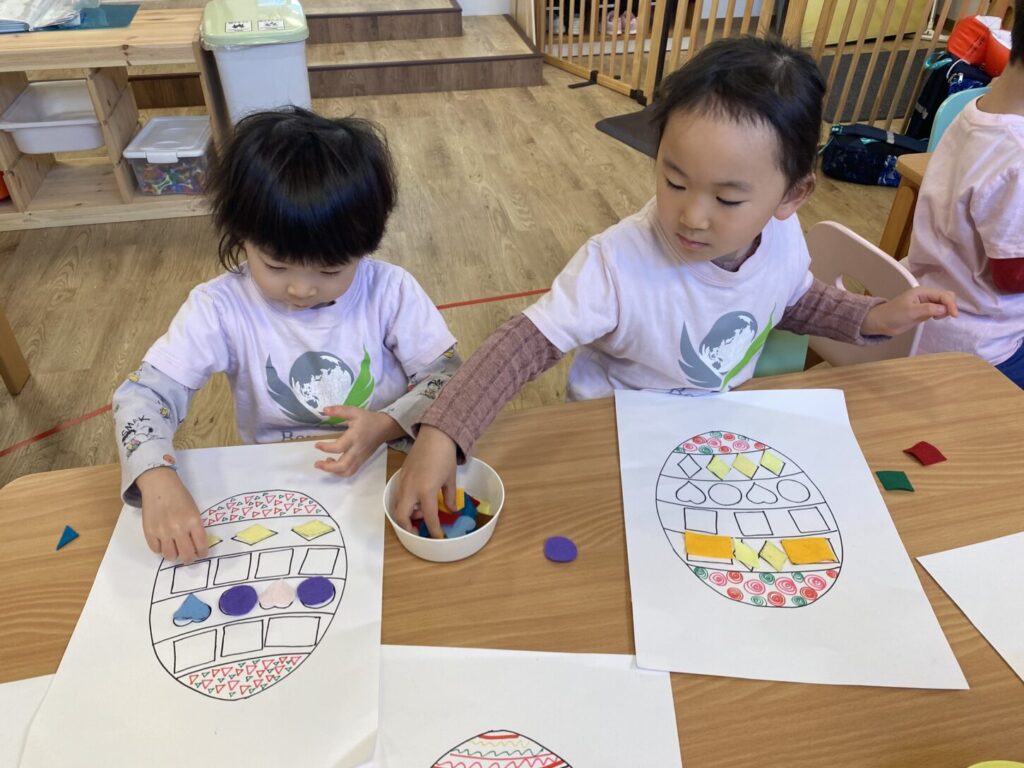
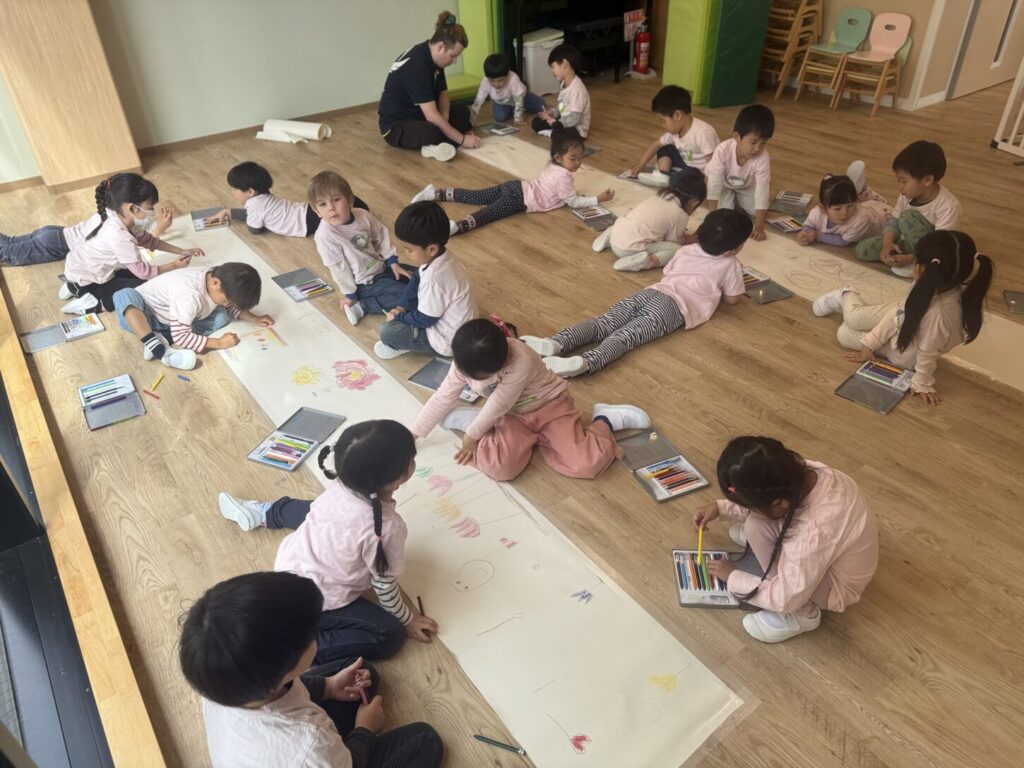
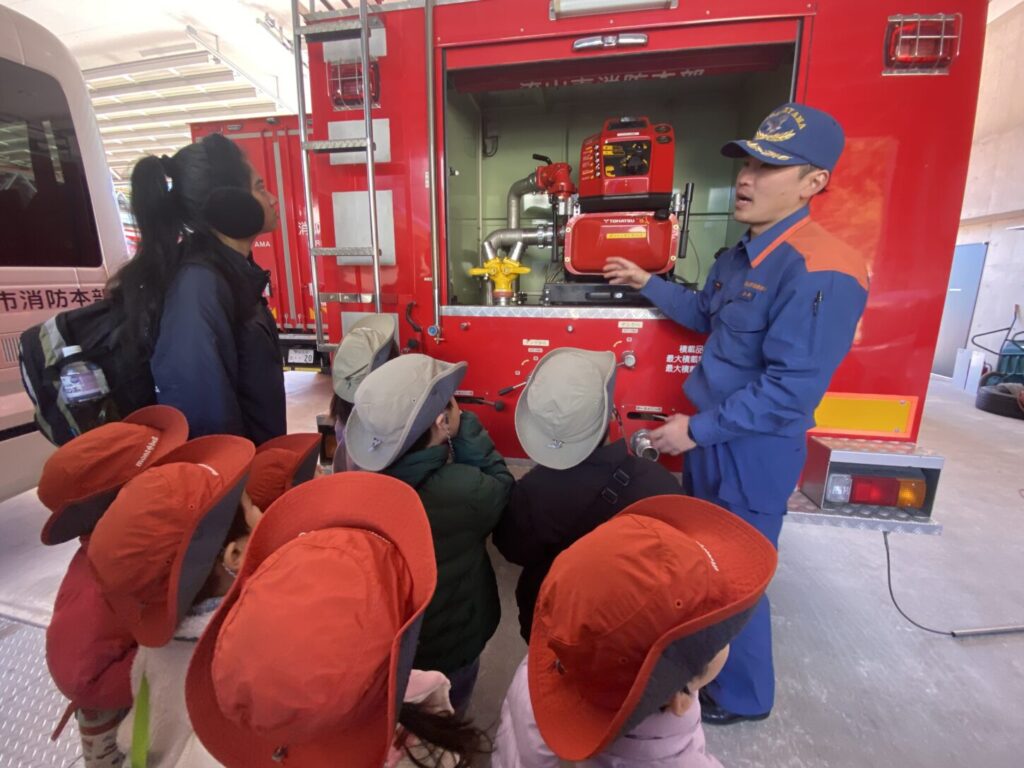
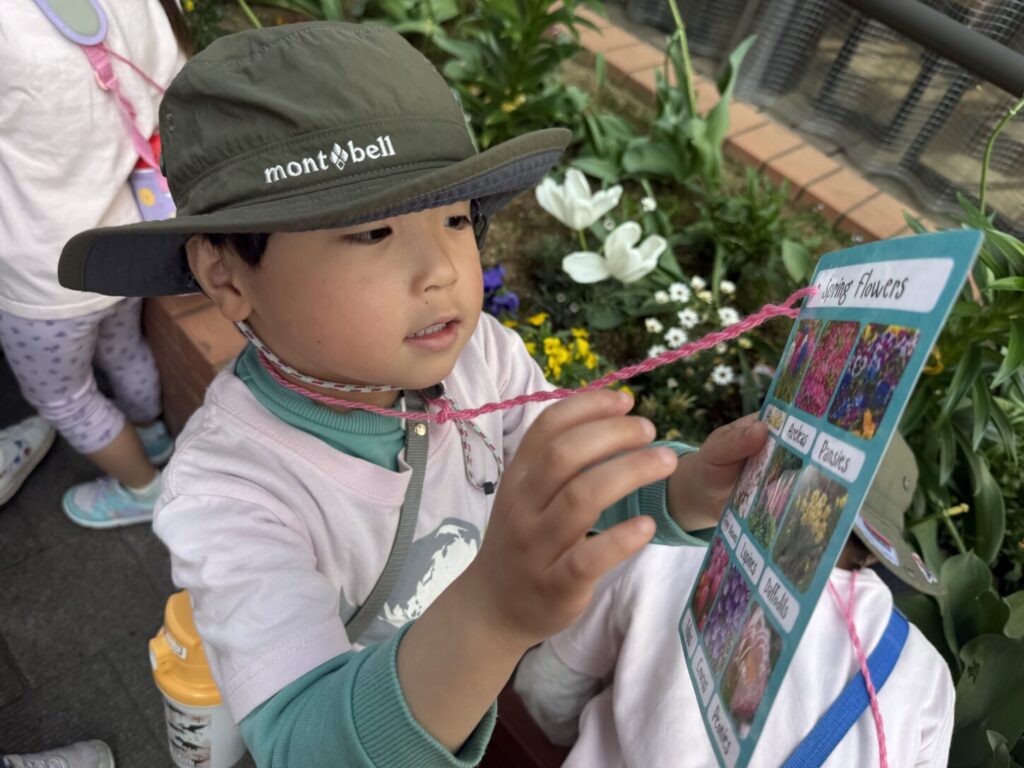
Inquiry can begin with something as simple as a child’s question. A child may notice flowers growing in the garden and wonder what plants need to survive. Another child may become curious about community helpers after seeing a firefighter in the neighborhood. These moments become opportunities for investigation, discussion, creativity, and reflection. Through hands-on experiences, children begin to make sense of the world around them and develop a deeper understanding of important concepts.
探究は、子どもたちの小さな疑問から始まります。例えば、お庭の花を見て「お花は何を食べるの?」と疑問を持ったり、地域をお散歩して「消防士さんはどんなお仕事をしているの?」と興味を持ったりすることがあります。その疑問から観察したり、調べたり、話し合ったり、作品を作ったりしながら、子どもたちは少しずつ理解を深めていきます。日々の生活の中に、探究のきっかけはたくさん隠れています。
Benefits of Inquiry-Based Learning/ 探究型学習が育む力
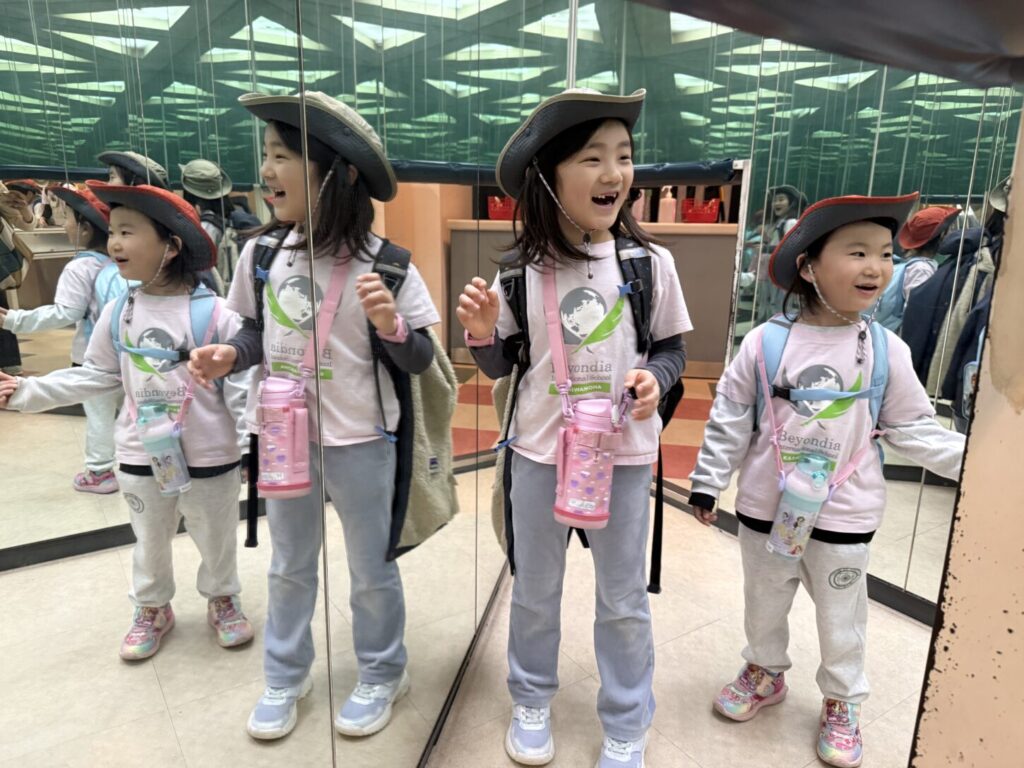
Inquiry-based learning helps children develop much more than academic knowledge. As children explore, ask questions, and work together, they build important lifelong skills such as communication, critical thinking, creativity, collaboration, and independence. They learn to express their ideas, listen to others, solve problems, and approach challenges with confidence. These skills support success not only in school but throughout life.
探究型学習では、知識だけではなく、これからの時代を生きていくために必要な力も育まれます。子どもたちは、自分の考えを伝えたり、お友だちの話を聞いたり、問題を解決したりしながら、コミュニケーション能力や思考力、創造力、協働する力、そして自信を身につけていきます。これらの力は、小学校以降の学びだけでなく、将来社会で活躍していくためにも大切な力となります。
Learning Begins with Curiosity/ 学びは「なぜ?」から始まる
Every great discovery begins with a question. At Beyondia International School Kashiwanoha, we believe that curiosity is the starting point for meaningful learning. By encouraging children to ask questions, explore ideas, and learn through play and real-world experiences, we help them develop the confidence and skills they need for the future.
If you would like to learn more about inquiry-based learning and our journey as an IB PYP Candidate School, we invite you to visit our campus and see inquiry in action. We would love to welcome you for a school tour and share how curiosity, play, and meaningful experiences inspire learning every day at Beyondia.
すべての発見は、小さな「なぜ?」から始まります。Beyondia International School Kashiwanohaでは、子どもたちの好奇心を大切にし、一人ひとりが自分らしく学びを楽しめる環境づくりを目指しています。子どもたちが遊びや体験を通して学び、自ら考え、発見する喜びを感じながら成長していく姿を、私たちは日々大切にしています。
探究型学習やIB PYPについてもっと知りたい方は、ぜひ学校見学へお越しください。実際の教室で、子どもたちがどのように学び、成長しているのかをご覧いただければ幸いです。皆さまのご来校を心よりお待ちしております。
